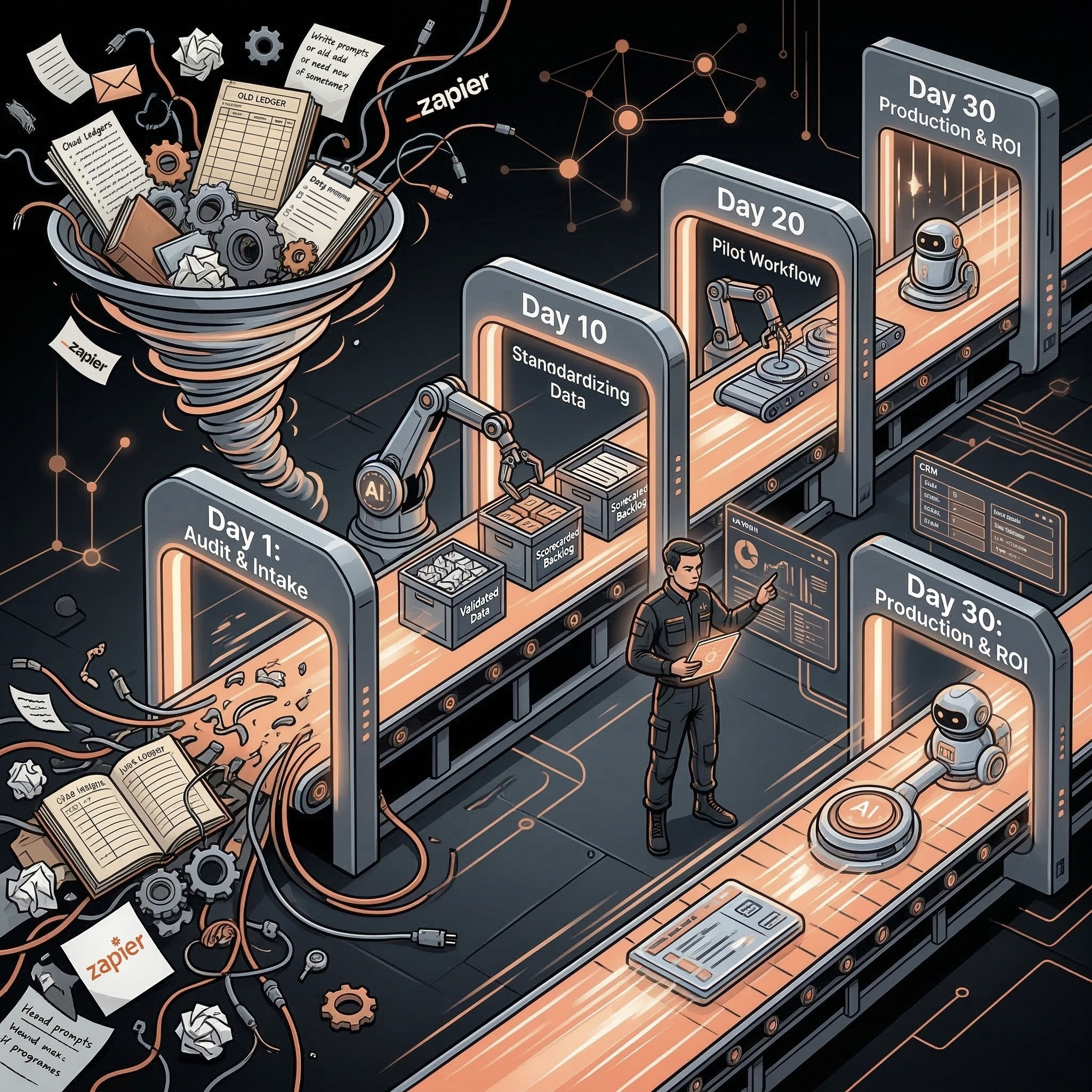
An AI operator is the person, partner, or operating function responsible for turning AI tools, automations, and agents into reliable business workflows. For SMBs, the AI operator owns process selection, prompt and workflow design, integrations, QA, human approval rules, and ROI tracking.
The role matters because most AI failures are not tool failures. They are ownership failures. A team buys software, tries a few prompts, builds one fragile automation, and then nobody maintains the system or measures the business result.
AI
Have a workflow to improve?
Discuss an automation project
Working on post-call CRM? Run the free readiness check
The quick answer
An AI operator turns scattered AI experiments into a managed operating layer. Instead of asking every team member to become an AI expert, the operator chooses the right workflows, builds the automation safely, and keeps humans in the loop where judgment is required.
What an AI operator actually does
The operator maps workflows, identifies repetitive decisions, connects systems, designs prompts and rules, creates exception handling, tests outputs, trains the team, and reports on business metrics. The work is closer to operations and systems design than prompt writing.
AI operator vs AI agent vs automation agency
An AI agent is software that performs a task. An automation agency builds systems for clients. An AI operator is accountable for the whole operating loop: workflow, tools, data, approvals, performance, and continuous improvement.
Common SMB use cases
The strongest early use cases are lead follow-up, CRM cleanup, sales coaching, proposal drafting, support triage, document processing, churn-risk alerts, invoice routing, and weekly reporting. These workflows have clear inputs, visible ownership, and measurable outcomes.
When you need one
You need an AI operator when AI work is spread across random tools, nobody owns maintenance, and leadership cannot answer which workflows are saving time or creating revenue. You also need one before automating workflows that touch customers, revenue data, or compliance-sensitive information.
What to measure
Track hours saved, response time, cycle time, error rate, adoption, SLA performance, qualified pipeline, churn-risk interventions, and payback period. If the automation cannot be measured, it should not be treated as production infrastructure.
Recommended next step
Start with the AI readiness audit, then use the 30-day automation roadmap to turn one workflow into a controlled pilot.
Want a second opinion on the first workflow to automate? Contact AI Operator for an automation opportunity audit.