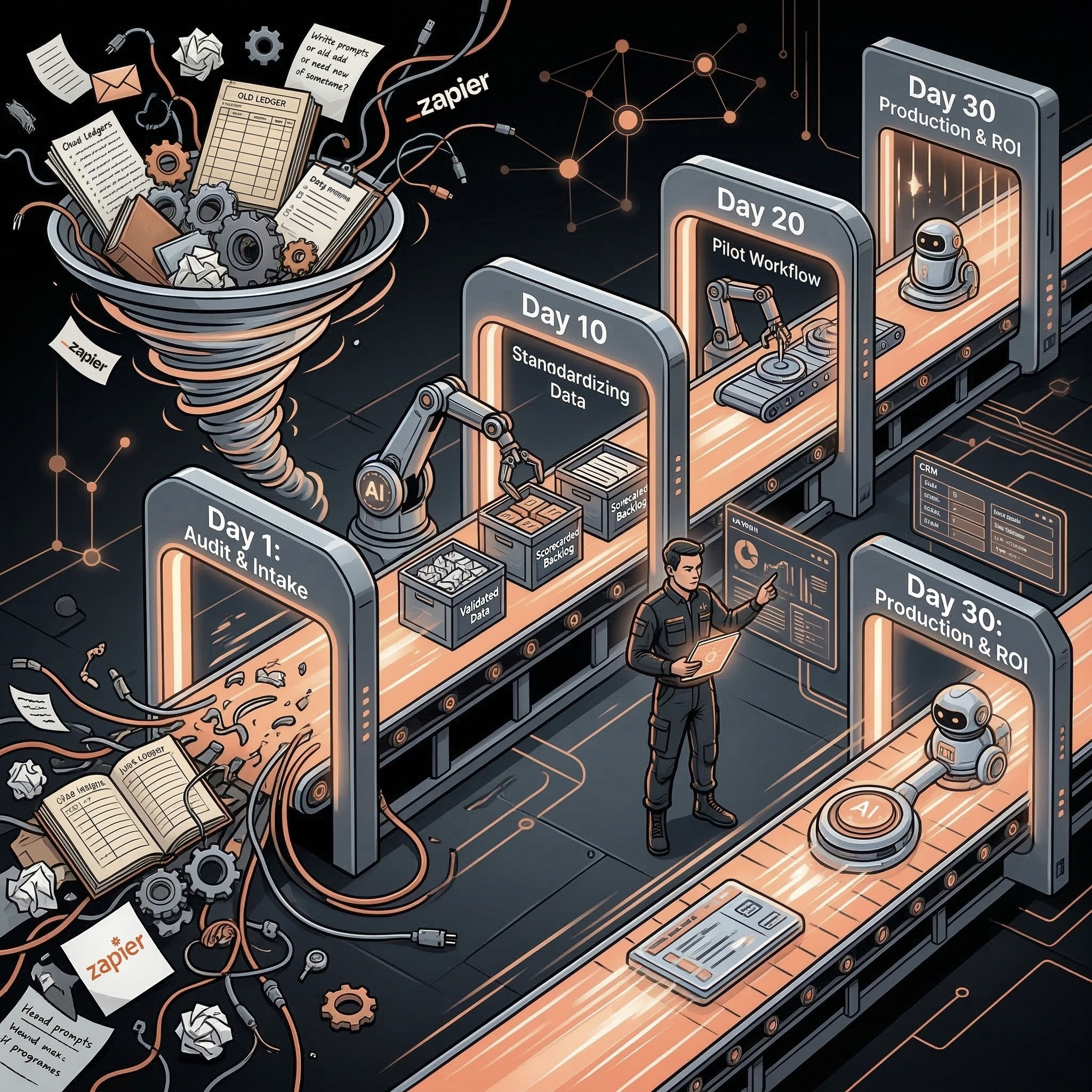
SaaS marketing automation creates measurable growth when it connects campaign signals to sales, customer success, product usage, and reporting. AI operators make that connection faster by handling enrichment, routing, drafting, and quality checks.
The goal is not more campaigns. The goal is fewer dropped handoffs and faster decisions.
Marketing
Have a workflow to improve?
Discuss an automation project
Working on post-call CRM? Run the free readiness check
The quick answer
AI operators help SaaS marketing teams by qualifying leads, enriching accounts, routing intent signals, drafting lifecycle messages, refreshing content briefs, cleaning campaign data, and preparing weekly performance summaries.
Start with the handoff, not the campaign
Most SaaS marketing problems show up between systems: lead capture to CRM, CRM to sales follow-up, trial usage to customer success, webinar attendance to nurture, or campaign reporting to leadership. Those handoffs are ideal AI automation candidates.
Where AI operators fit in SaaS marketing
Use AI to standardize repetitive marketing work: summarize intent, classify form fills, flag ICP fit, draft segment-specific emails, create campaign QA checklists, and compile reporting narratives from source metrics.
What to measure
Track speed to lead, percentage of qualified leads routed correctly, manual hours saved, email QA errors, campaign reporting latency, conversion by segment, and accepted pipeline from AI-assisted workflows.
What to avoid
Avoid automating vague nurture before the ICP, offer, lifecycle trigger, and success metric are clear. AI will multiply weak positioning as easily as it multiplies good process.
Recommended next step
Compare the broader difference between classic automation and AI marketing in /blog/marketing-automation-vs-ai-marketing, then map the first workflow with /blog/ai-automation-roadmap-30-days.